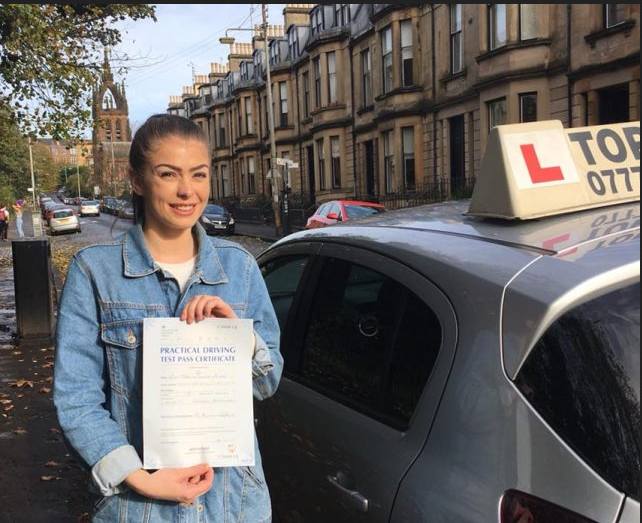
What matters most to you — price, patience, or pass rate? It sounds like a simple question. In practice, most people looking for a Glasgow automatic driving instructor don’t know how to weigh those things up until they’ve already had a bad experience. And a bad experience can set you back weeks, cost you money you didn’t need to spend, and leave you more anxious than when you started.
Automatic driving lessons are becoming a popular choice in Glasgow, particularly among nervous learners and adults returning to driving. Schools like Top Gear Driving Tuition are one example of providers offering automatic lessons tailored to learners who want a less stressful route to their licence. But before booking anywhere, it helps to know what to actually look for.
This post walks through the key factors worth checking before you commit — qualifications, reviews, teaching style, pricing, and reputation. None of it is complicated, but skipping these steps is how learners end up with the wrong instructor for months.
Check Qualifications and Experience First
This should be the starting point, not an afterthought. Every driving instructor legally operating in the UK must be registered with the DVSA as an Approved Driving Instructor (ADI). You can verify this on the government’s official ADI register. If an instructor isn’t on it, walk away.
But being registered is only the baseline. What matters beyond that is experience — specifically, local experience. Glasgow roads have their own character. The approach to the M8, the Clyde Tunnel, roundabouts around the city centre, the specific quirks of test routes at Shieldhall and Anniesland — these aren’t things you can read from a textbook. An instructor who has taught in Glasgow for years will know exactly what catches learners out at each test centre.
It’s also worth asking whether the instructor specialises in automatic vehicles or teaches both manual and automatic. Some do both perfectly well. Others are more experienced with one or the other. For automatic lessons specifically, an instructor who teaches automatics regularly will understand the common habits and mistakes unique to automatic learners — and correct them before they become a problem.
Experience also tends to make instructors more adaptable. A newer instructor might follow a fairly rigid lesson structure. A more experienced one will read where you are on a given day — whether you’re sharp and ready to push on, or distracted and in need of a quieter session — and adjust accordingly.
Read Reviews and Student Testimonials
Google reviews are worth reading carefully. Not just the star rating — the actual content of the reviews. A school with 4.9 stars and twelve reviews tells you less than one with 4.7 stars and two hundred reviews. Volume matters.
Look for patterns. Do multiple reviewers mention patience? Do they say lessons felt well-organised? Do they mention passing first time? Those recurring themes are more reliable than any single glowing review.
Red flags are worth noting too. Consistent complaints about last-minute cancellations, rushed lessons, or instructors who weren’t supportive of nervous learners — these tend to show up in reviews before too long. One bad review can be a misunderstanding. Three similar ones probably aren’t.
One learner left a review noting that after two frustrating years with two different instructors, she passed her test at Baillieston on her first attempt after switching schools. She specifically mentioned that the instructor never made her feel rushed. That kind of detail — specific, unprompted, detailed — is the kind of review worth paying attention to.
Assess Teaching Style and Communication
Will you feel comfortable learning with this instructor? That’s maybe the most important question on this list, and it’s also the hardest to answer without actually getting in the car.
Teaching style varies more between instructors than most people expect. Some are very structured — they explain each skill, demonstrate it, then ask the learner to try. Others are more instinctive, reading the learner’s reactions and adjusting in the moment. Neither approach is wrong. But one might suit you better than the other.
For nervous drivers especially, the ability to stay calm matters. Not just calm as a personality trait — calm in the specific situation where something goes wrong. If you stall at a junction, or misjudge a roundabout, or forget which lane you need — the instructor’s reaction in that moment tells you everything about whether you’ll feel safe continuing.
Clear explanation is also worth looking for. Some instructors assume learners know more than they do. Others over-explain to the point of overwhelming. You want someone who pitches their communication at the right level for where you actually are — not where they assume you should be.
The simplest way to assess all of this is to book a trial lesson. Most reputable instructors offer one. It removes the guesswork and lets you make a decision based on actual experience rather than a website bio.
Compare Pricing, Packages, and Availability
Price is a factor. It would be odd to pretend otherwise. But choosing an instructor purely on price is one of the more reliable ways to end up needing more lessons than you would have with a slightly more expensive option.
Automatic lessons in Glasgow typically cost a little more than manual lessons, reflecting the higher running costs of the vehicles. That difference is usually modest, and for many learners the faster progress in an automatic offsets it over time.
Block booking discounts are worth asking about. Many schools offer reduced rates if you pay for a set of lessons upfront — typically ten hours or more. It can represent a reasonable saving if you’re confident you’ll want to continue with that instructor.
Availability matters too. If a school can only offer lessons on weekday mornings, that rules out a large portion of working adults. Look for instructors who cover evenings and weekends. And check what happens if you need to cancel — some schools have strict cancellation policies that can cost you if life gets in the way.
Consider Pass Rates and Overall Reputation
Pass rates are quoted everywhere and verified almost nowhere. Most driving schools don’t publish audited figures, so treat headline claims with some caution. What tells you more is consistent word-of-mouth reputation — the kind built over years, not manufactured through a review campaign.
In Glasgow, the driving instruction community is reasonably well-connected. Instructors and schools develop reputations that spread through learner networks, local Facebook groups, and community recommendations. A school that regularly produces well-prepared learners doesn’t need to shout about it — people do that for them.
One useful approach is to ask the instructor directly how they assess test readiness. A confident, experienced instructor will give you a clear answer about what they look for before recommending a learner books their test. One who pushes test bookings early — before the learner is genuinely ready — is prioritising throughput over outcomes.
If you’re genuinely unsure, try two or three trial lessons with different instructors before committing. It takes a bit more time upfront, but it’s far better than spending months with someone who isn’t the right fit.
Find the Right Fit and Start with Confidence
Choosing a Glasgow automatic driving instructor comes down to a handful of things: verified qualifications, genuine local experience, a teaching style that works for you, transparent pricing, and a reputation that holds up to scrutiny.
None of these are difficult to check. The difficulty is knowing to check them before booking rather than after a few frustrating lessons.
Take the time to do a little research, book a trial lesson, and trust what you feel during that first session. The right instructor makes a measurable difference. Book a trial lesson and start your driving journey with confidence.
Frequently Asked Questions
What qualifications should a driving instructor have in Glasgow?
All driving instructors in the UK must be registered with the DVSA as Approved Driving Instructors (ADIs). You can verify any instructor’s status on the government’s ADI register. Beyond that, look for relevant experience teaching in Glasgow specifically, as local knowledge of test routes and road conditions makes a genuine difference.
How do I know if an instructor is right for me?
A trial lesson is the most reliable way to find out. It lets you assess communication style, teaching pace, and whether you feel at ease — all things that are hard to judge from a profile or website. Most reputable instructors offer a trial lesson for this reason.
Are automatic driving instructors more expensive in Glasgow?
Automatic lessons can be slightly higher in price than manual lessons, reflecting the running and maintenance costs of automatic vehicles. The difference varies between schools. For learners who progress faster in automatics, the overall cost across all lessons is often comparable to — or less than — a longer manual learning journey.
How important are reviews when choosing an instructor?
Very important — but read them carefully rather than just checking the star rating. Look for patterns across multiple reviews: recurring mentions of patience, clear communication, and test preparation quality are more telling than individual praise. Pay attention to negative reviews too, particularly if similar complaints appear more than once.
